









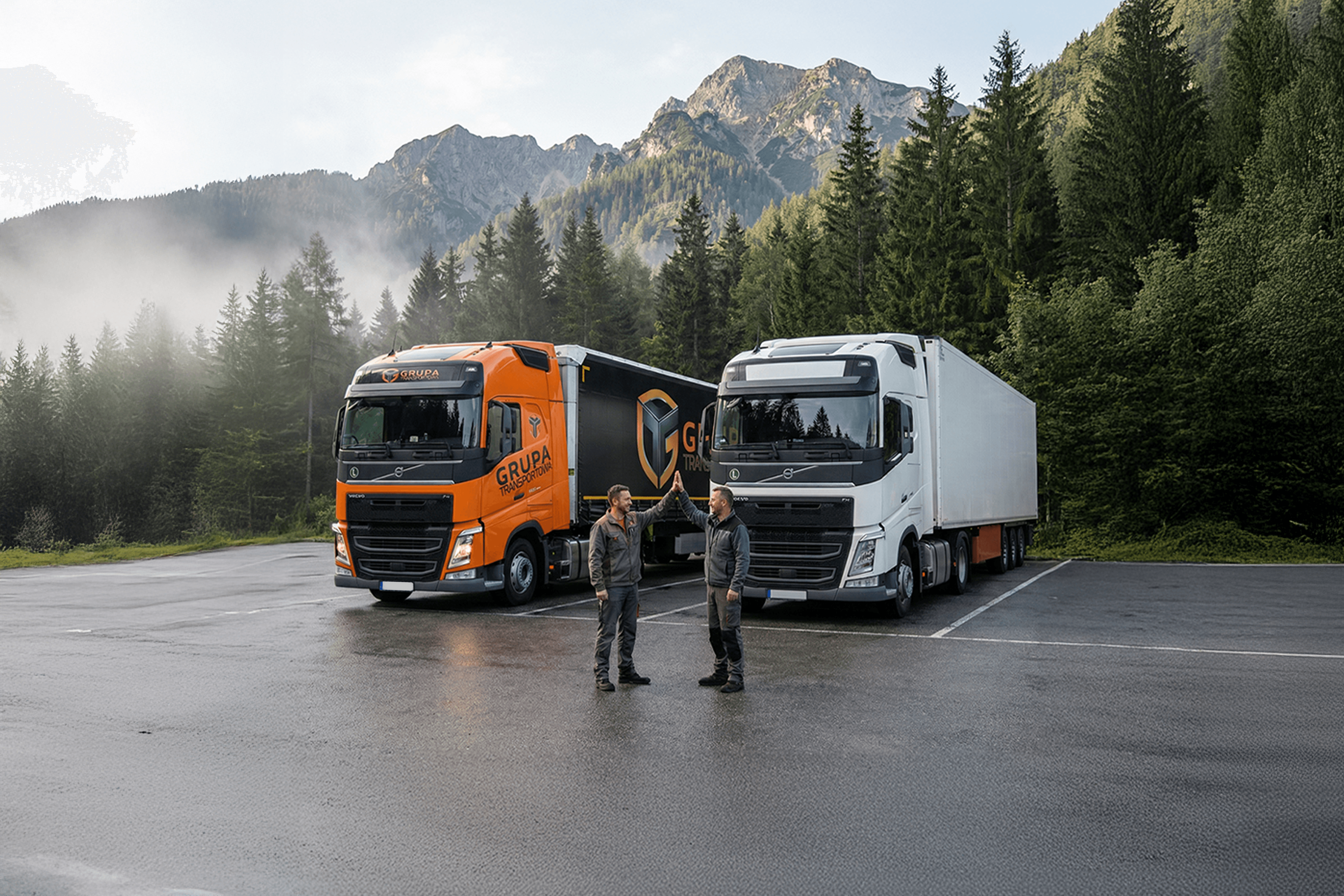
What is more important in road transport? Rates or relationships? This question is answered by the Carrier Manager, Izabela Jadwiszczak, who will talk about the business philosophy of the Transport Group and who the carrier is for us - a partner with whom we build a business together.
The Power of Invisible Threads: Why Transport Is Won by Relationships Rather Than Rates
In the transport and forwarding industry, where every day is a race against time, weather and global supply chains, it is easy to fall into the trap of thinking that only price and deadline matter. Diesel, GPS, and increasingly smarter algorithms optimizing routes – all of this matters. However, having many years of experience in this profession, I know one thing: it is not the technology or even the best rate that determines who will survive on the market. It's relationships. These invisible threads that connect people and companies. Trust built over the years, which is expressed in the fact that the partner answers the phone at two in the morning when something goes wrong. In that it doesn't leave you out in the cold when the market goes crazy. As a contract carrier manager in the Transport Group, I build these roads every day. Sometimes even bridges. And although it may sound lofty, they – relationships – are my most important KPI. Because in today's reality, you can have the cheapest offer and the most modern fleet, but without the people you trust? You won't survive the first crisis.A lesson from the A2 motorway (and from life)
I look at my first steps in this role with a slight grain of salt. Fresh from the promotion, I was looking through the offers of carriers like Excel sheets – numbers, rates, discounts, deadlines. Everything seemed purely mathematical. I chose the lowest price. Logical, right?
The result? A number of unnecessary complications and problems in slow motion. Delays because the driver did not know the specifics of the cargo. Communication through "smoke signals" – emails without answers, calls redirected endlessly. Frustration on both sides. Thanks to my knowledge, I quickly mastered the problem, but due to the need to look for a replacement in emergency mode, we lost time and money – and after all, nothing failed on our side. This is the reality of transport.
That was lesson number one: cheap transportation is not always a good deal. And sometimes it's not a business at all.
Today, after years of negotiations and hundreds of hours spent talking to carriers – from small one-man companies to large fleets – I know that the real value lies elsewhere. In trust. In the fact that when the fleet gets stuck in a traffic jam near Berlin at 11:00 p.m., someone will answer the phone. In the fact that you can count on an honest conversation when the market is going crazy with inflation, staff shortages or further changes in the Mobility Package.
Those who stayed – the pandemic as a test of character
The pandemic was more than a crisis for the transport industry. It was a test. I remember March 2020 – closed borders, drivers treated like lepers, disinfectants more expensive than fuel. Rates soared every day, and supply chains burst like seams. Some carriers disappeared overnight. Missed calls. Emails without answers. I understood them – everyone saved their own. But there were also those who stayed. With whom we have built relationships over the years, although – I admit honestly – we have not always been able to offer the most favorable rates. Instead of renegotiating contracts in a panic or running to better-paid orders, we sat together in front of the screens and looked for solutions. How to organize transport when borders are closed? How to protect drivers? How to survive when half of the crew is in quarantine? I remember a small company from Wielkopolska – three trucks, the owner still drives himself. During that difficult time, they helped us with the urgent transport of masks and disinfectants, knowing that our drivers were not available or were in quarantine. We, in turn, helped them gain new routes and contacts when their main client suspended their business. It was not an exchange of services stipulated in the contract. It was a partnership – built on trust, not Excel.The price of silence (or what carriers don't tell you)
I have a theory that the biggest problem in the transport industry is low rates, just a lack of honesty. Carriers don't tell you that they barely make ends meet because they're afraid you'll run away to the competition. You don't tell them about liquidity problems because you're worried about reputation.
And we are all stuck in this game of appearances until something breaks.
A few months ago, one of our partners – a company we've been working with for years – called me after hours. His voice was different than usual. "Iza, I have to be honest. I will not be able to cope with this contract under the current conditions. The increase in costs has killed me."
I could say: "it's difficult, a contract is a contract". I could start looking for a cheaper one. But I chose to talk. We sat down, broke down each cost. It turned out that we were able to optimize some of the routes, and move some to other dates, which allowed them to make better use of the fleet. We renegotiated rates in key fields.
Did it cost us? A little. Was it worth it? Absolutely. Because today, this partner submits ideas for improvements to us, warns us of problems before they grow, and takes on more difficult orders without additional negotiations. This is the value of honesty in relationships.
A new face of cooperation – more than just "back and forth"
The industry is changing, and with it the relationships. Today, it is no longer just a matter of the carrier bringing the cargo from point A to B on time. It is about joint development, co-responsibility, partnership in the true sense of the word. At Grupa Transportowa, we strongly focus on this direction. Our annual meetings with carriers are not rigid conferences with PowerPoint and sandwiches during the break. These are workshops over coffee, sometimes at the barbecue, where we talk about real problems: how to manage rising costs. We also invest in training – but not those corporate "mandatory webinars", but practical workshops on ecodriving, route planning, working time management. Because a strong partner is a developing partner, not one who barely zips. And yes, I know someone reads this and thinks, "it sounds beautiful, but it costs money." Yes, it does. But do you know what costs more? Carrier rotation, constant search for replacements, breakdowns on the route, delays, lost contracts.Relationships as a competitive advantage (not sentiment)
To be clear – I'm not naïve. The transport industry is a tough world. The competition does not sleep, margins can be as thin as paper, and cost pressure is constant. I don't build relationships because I'm a romantic, just because it just pays off.
Research (and my practice) shows that companies with strong partnerships have up to 30% lower carrier turnover and recover faster from disruptions. This is not magic, but the effect of the principle of reciprocity: support today means loyalty tomorrow.
And loyalty in practice? It is a carrier that calls itself when it finds a cheaper solution, although it could keep quiet and earn more. It's a partner who suggests a route you haven't thought of. This is a man who does not run to the competition in a crisis, but calls and asks: "how can I help?"
A challenge for you (and me)
Colleagues in the industry – if you are reading this between one tender and another – stop for a moment. Instead of chasing another reduction, invest in a conversation. Not such a corporate "status meeting", but a real one. Ask your partner, "How do you really feel about this collaboration? What can I do to make it better?" Share your knowledge, support, experience. Break this game of appearances. Because in transport, where every kilometer is a risk, every delay is a cost, and every crisis is a test – the real strength lies in relationships. They will survive the storms and lead us to new horizons. They will make sure that when everyone around you fights with the price, you will win with the quality of cooperation. And me? I'm still building these threads. Every day. Sometimes frustratingly slow. Sometimes with mishaps. But persistently. Because I believe that in this crazy world of trucks, deadlines and pressures, they are our most valuable cargo.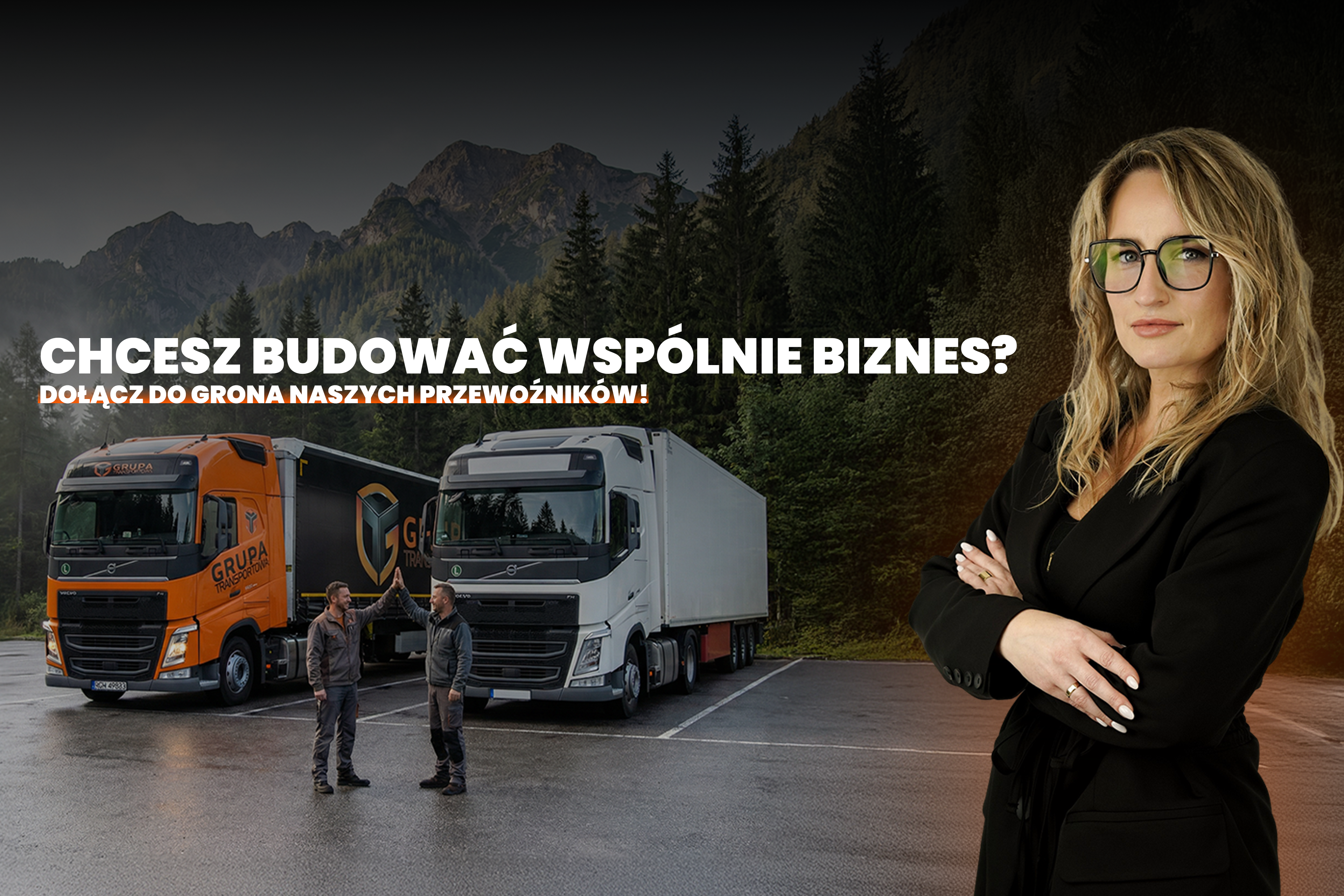
Write to us: przewoznik@grupatransportowa.pl